3 Min Read
Smarter Kitchen Remodels in 2026
Kitchen technology continues to evolve, but homeowner priorities have become more focused and practical. In 2026, homeowners planning a remodel are no longer searching for the most advanced or automated kitchen possible. Instead, they are seeking guidance from an experienced kitchen contractor who can help them understand which technology upgrades will truly improve daily use.
This change reflects a more educated homeowner mindset. After years of fast-moving trends and overpromised “smart” features, homeowners now value reliability, simplicity, and long-term performance.
From Smart Features to Practical Systems
From a kitchen contractor’s perspective, technology should simplify the kitchen, not complicate it. In 2026, kitchen remodels are designed around daily routines first, with technology added only when it clearly supports how the space is used.
Experienced kitchen contractors help homeowners evaluate:
-
Whether an upgrade reduces daily friction
-
How it integrates with cabinetry, layout, and workflow
-
Whether it will remain useful five to ten years from now
This function-first approach leads to kitchens that perform well long after construction is complete.
Lighting Planned by Kitchen Contractors, Not Gadgets
Lighting remains one of the most impactful elements of a kitchen remodel and one of the most misunderstood. A professional kitchen contractor treats lighting as a coordinated system rather than a decorative decision.
Modern kitchen lighting plans typically include:
-
Task lighting for prep and cooking areas
-
Ambient lighting for overall comfort
-
Accent lighting to define space and add warmth
In 2026, kitchen contractors are prioritizing simple, intuitive controls that homeowners can use easily without relying on apps or voice systems. The goal is comfort and consistency throughout the day.
Power Planning That Supports Everyday Living
From a construction standpoint, power access is one of the most practical technology upgrades available. Kitchen contractors are increasingly planning for:
-
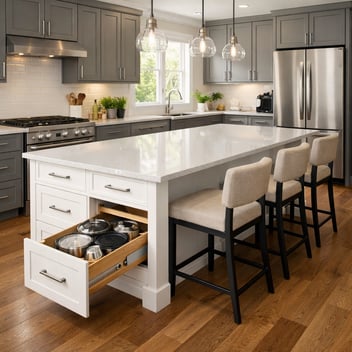
Charging drawers built into cabinetry
-
Strategically placed outlets in islands and prep zones
-
USB-C outlets that support modern devices
These features are addressed early in the remodeling process to align with layout, safety standards, and building codes. When power is planned intentionally, it reduces clutter and improves daily usability.
Ventilation as a Comfort and Health Priority
As kitchens continue to open into adjacent living spaces, ventilation has become a core design consideration. Kitchen contractors now place greater emphasis on systems that manage heat, grease, and odors effectively without overwhelming the space.
In 2026, well-designed kitchen ventilation focuses on:
-
Proper sizing based on cooking habits
-
Quiet operation
-
Clean integration into cabinetry or ceilings
Contractor experience plays a critical role here, as ventilation performance directly affects comfort, indoor air quality, and long-term satisfaction.
Appliance Choices Guided by Kitchen Contractor Experience
Rather than choosing appliances based on feature lists alone, homeowners are increasingly relying on kitchen contractors to guide decisions based on real-world performance.
In 2026, appliance recommendations are commonly evaluated based on:
-
Reliability and service history
-
Energy efficiency
-
Long-term serviceability and parts availability
Smart features are considered when they add practical value, but they are no longer the primary driver of appliance selection.
Technologies Kitchen Contractors Approach with Caution
Just as important as what to include is what to avoid. Many kitchen contractors advise homeowners to be cautious with technology that:
-
Adds unnecessary complexity
-
Requires frequent updates or proprietary apps
-
Increases maintenance or complicates resale
These recommendations are based on years of post-remodel feedback and long-term homeowner experience, not short-term trends.
Why Contractor-Led Planning Matters
The defining factor in successful kitchen remodels in 2026 is not technology, but planning. A qualified kitchen contractor begins by understanding how the household uses the kitchen and identifying pain points in the existing layout.
Technology is then evaluated as a supporting tool, not a starting point. This results in kitchens that feel intuitive, adaptable, and durable over time.
Frequently Asked Questions About Kitchen Technology in 2026
Do smart kitchens increase home value?
Technology can add value when it improves function and usability. Kitchen contractors generally recommend prioritizing practical upgrades over novelty features that may not appeal to future buyers.
Should a kitchen contractor help choose appliances?
Yes. An experienced kitchen contractor understands installation requirements, ventilation needs, and long-term service considerations that affect appliance performance.
What technology upgrades are most worth it in a kitchen remodel?
Lighting controls, power access, ventilation, and energy-efficient appliances consistently provide the greatest long-term benefit.
Is it better to upgrade technology now or later?
Many technology upgrades are most cost-effective when planned during the remodel, especially those involving wiring, cabinetry, or ventilation.
Closing Perspective: Remodeling Made Simple
A smart kitchen in 2026 is not defined by automation or novelty. It is defined by thoughtful planning, reliable systems, and execution guided by experience.
At Wolfe Construction, our role as a kitchen contractor is to help homeowners make informed decisions, avoid unnecessary complexity, and design kitchens that function well for years to come. By focusing on clear communication, proven construction practices, and realistic planning, we work to keep the remodeling process straightforward and manageable.
That is how we deliver on our promise of Remodeling Made Simple—and why we continue Leading the Pack in Customer Experience for homeowners planning well-executed kitchen remodels.